

Prerequisites
Before you start, you will need the following information from MySQL.- Host (Endpoint without the port or database name)
- Port (The port used to connect to your database)
- User (The username of the service account)
- Password (The password for the service account user)
- SSL, if active (Toggle “Connect Through TLS” switch)
Connecting MySQL to Peaka
- Navigate to the data model page in Peaka.
- In the side menu bar, click the “New Data Source” button to initiate the connection process.
- In the modal that appears, select “MySQL” as your data source.
-
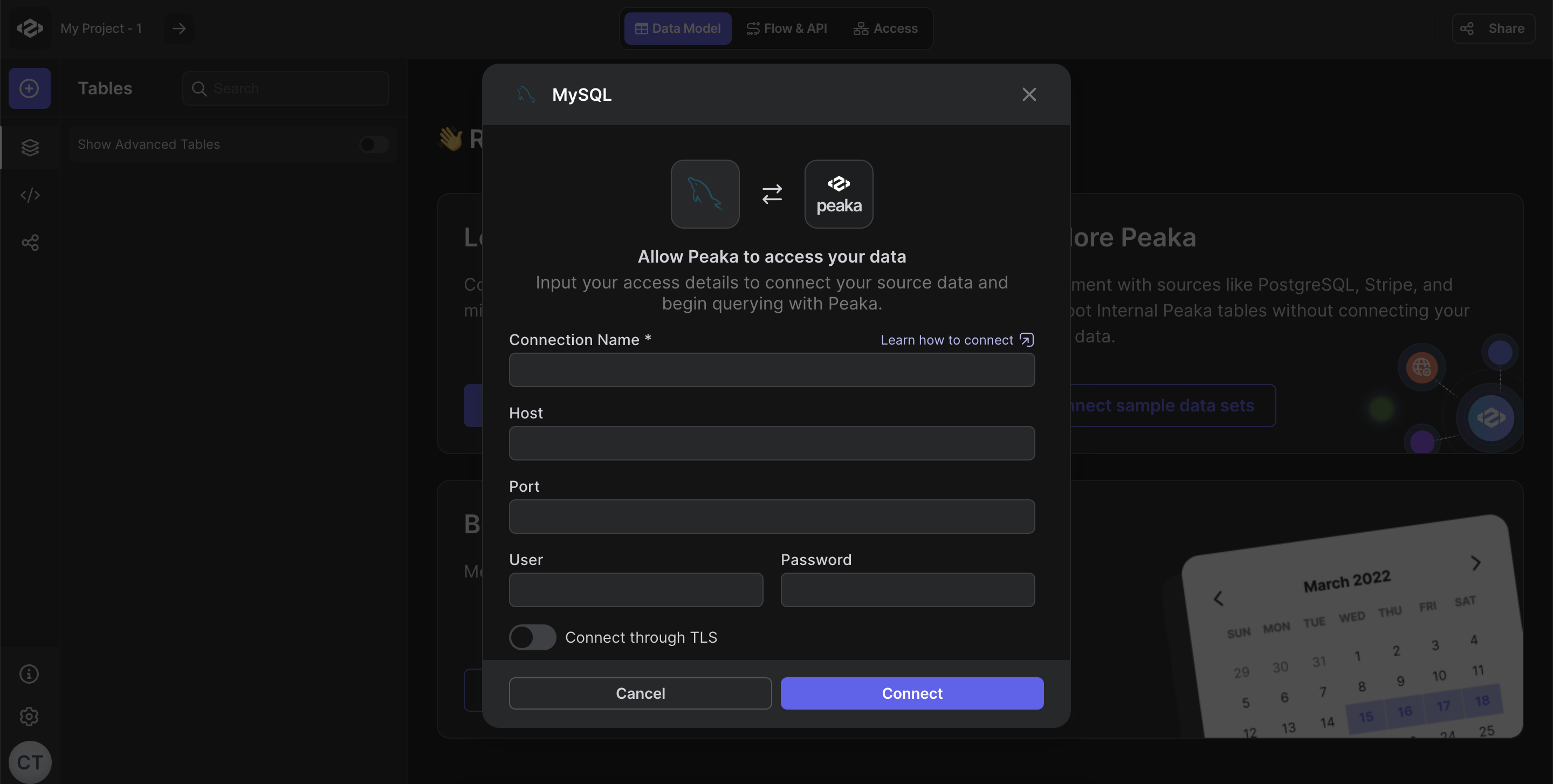
Fill out the data source details form as shown in the image below, including:
- Host (Endpoint without the port or database name)
- Port (The port used to connect to your database)
- User (The username of the service account)
- Password (The password for the service account user)
- Connect Through TLS (Toggle switch if SSL is active)
- Click “Next” to establish the data source.
 Congratulations! You’ve successfully created a new data source between MySQL and Peaka. You can now access and manage your MySQL data seamlessly within the Peaka platform.